What changes when a musical meets the camera?
A close-up, a wide shot, a change of scale: film has its own way of making a song dramatic.
The camera chooses the seat
On a stage, the audience can decide where to look within a shared space. On screen, framing and editing make that decision moment by moment. A musical adaptation therefore involves more than putting a camera in front of a performance. It changes how attention travels. A small expression can fill the screen; a movement can continue across locations; a cut can alter the emotional weight of a phrase.
Think in scale
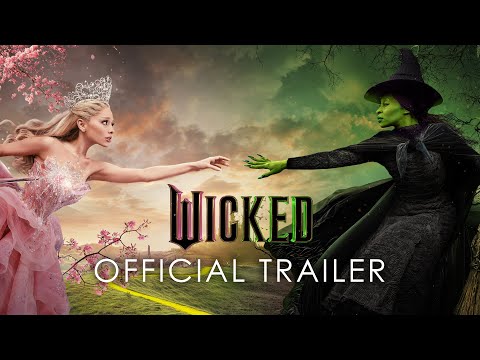
The official Wicked trailer provides a starting point for thinking about the move between a character and a wider fantasy world. Notice how a close view asks you to read an expression, while a larger image invites you to explore a setting. Neither scale replaces the other. Their relationship helps a filmed musical balance private feeling with spectacle. The audience can be close to a person and then suddenly aware of the world around them.
Two forms, different pleasures
A stage production and a screen adaptation do not need to be interchangeable to be worthwhile. Theatre offers the energy of shared time and physical presence. Film offers control over distance, perspective and the precise sequence of images. Comparing them becomes more interesting when we ask what each form makes possible. Instead of measuring every change as a loss, look for a creative response to the new medium. The question is whether the choices make the moment vivid, not whether the camera can recreate the experience of sitting in a theatre.
Wicked - Official Trailer
Source: Universal Pictures — official upload
This article is original editorial perspective. The linked video is presented by its original publisher.